Case Study ——
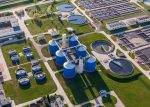
Toronto Transit Commission McNicoll Bus Garage
Manufacturing air handling units designed to deliver the highest possible energy recovery efficiency with the lowest possible cross-contamination rate.
Built to Toronto Green Standard requirements, the facility includes multiple sustainable features, including one of the largest green roofs in Canada, solar panels, and a perforated metal solar wall to harness solar energy and help heat the building.
Project Details
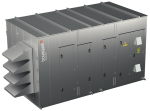
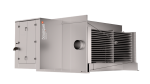
- 33 energy recovery units and 9 make-up air units
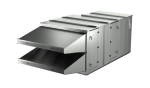
- Two-level stacked plate heat exchangers
- Total supply airflow of 700,000 CFM
- Programmable controller with BACnet communication protocol
- NEMA 4X wiring
recovery
Context
A solution engineered to maximize energy recovery without compromising air quality.
The TTC required fully outdoor air handling units that would deliver the highest possible energy recovery efficiency while minimizing cross-contamination to the greatest extent possible.Need
Solution
In collaboration with Klingenburg GmbH, 33 cross-flow air-to-air plate heat exchangers were selected and manufactured to provide virtually no exhaust air carryover, along with efficiencies of 70.9% under wet conditions and 60% under dry conditions, in accordance with AHRI 1060. Outdoor air and exhaust air bypasses were also integrated to limit frost buildup, facilitate direct purge, and reduce fouling of filters and heat exchangers.
Results
The high-efficiency, AHRI-certified heat exchangers, combined with the use of direct-fired burners, will generate substantial natural gas savings since these units will operate continuously. Annual natural gas savings are estimated at 4,408,111 m3 (158,595,546 ft3) for the site as a whole.
This represents a reduction of 80,572 tons of CO2 emissions per year for the facility!
We develop the right solution.